Selling a vacant lot isn’t quite like selling a house. There’s no inspection, no appliances to argue over, and often no agent walking buyers from room to room. But land sales share one thing with every other real estate deal: paperwork. Miss a form the county or the buyer’s title company expects to see, and a sale that should wrap up in a few weeks can drag on for months.
Table of Contents
ToggleSo, what documents are needed to sell land? At a minimum, you need a land deed to prove and eventually transfer ownership, property tax records showing your taxes are paid up, and a purchase agreement that spells out the terms both sides agreed to. A few supporting documents round out the rest of the file. Here’s a step-by-step look at what
to gather, when to gather it, and why each one matters.
Why the paperwork matters more than people expect
Land deals fall apart for a small set of predictable reasons: unclear ownership, a lien nobody knew about, a boundary that doesn’t match the deed, or a buyer who gets spooked after learning about a zoning restriction late in the process. Every document below closes one of those gaps. A title company will ask for most of them eventually anyway, so pulling them together before you list saves you from a scramble later — and it signals to buyers that you’re organized, which tends to make negotiations go smoother.
Step 1: Prove you actually own the land
Before you can sell anything, you have to show you own it.
Start with the deed. Your current deed is the recorded document that transferred the property to you, and it’s your single best proof of ownership. It also contains the legal description of the parcel — not the mailing address, but the surveyed boundaries recorded with the county. You’ll need this on hand both to confirm the description is accurate and to prepare the new deed for your buyer down the line. Lost your copy? Your county recorder’s or clerk’s office can usually pull a certified one for a small fee.
It also helps to have something beyond the deed backing you up. A property tax bill or assessor record confirms you’re the owner on file, which is a nice second layer of proof. And if the land came to you through inheritance, a trust, or an LLC, dig up the paperwork that shows you’re legally allowed to sell — a probate order, trust agreement, or articles of organization, depending on the situation.
Step 2: Pull your property tax records
No buyer or title company will move forward without confirmation that taxes are current. Unpaid property taxes attach to the land itself as a lien, and nobody wants to buy someone else’s tax problem along with the acreage.
Request a tax certificate or payment history from your county assessor showing the assessed value and payment status. If you owe back taxes, settle them before listing if
you can — or at least disclose them upfront, since a title search will surface them regardless. Clean records here go a long way toward keeping the deal on track.
Step 3: Order a preliminary title report
A preliminary title report (also called a title search) traces the chain of ownership on your parcel and flags any liens, easements, or other encumbrances attached to it. Ordering one yourself before listing, rather than waiting for the buyer’s title company to find problems mid-contract, means you deal with issues on your timeline instead of theirs.
If the report turns up an old mortgage that was paid off but never formally released, or an easement you didn’t know was there, get the lien release or other clearing paperwork sorted well before closing — not the week of.
Step 4: Get a survey if you don’t already have one
A survey isn’t always legally required to sell land, but it’s one of the more persuasive documents you can hand a buyer. It maps the exact boundaries and acreage, confirms your deed’s legal description is right, and catches any encroachments from neighboring parcels early. Buyers who are financing the purchase or planning to build will often ask for one anyway, so having it ready keeps things moving — and can even support your asking price.
Step 5: Check zoning and land-use rules
Pull the current zoning classification and any use restrictions from your local planning office. Buyers need to know what they’re actually allowed to do with the land — residential, agricultural, commercial, whatever the case may be — and a mismatch here is one of the more common ways a deal falls apart late in the process. If there’s a special designation on the parcel — flood zone, wetlands, a conservation easement, HOA rules — have that documentation ready too.
Step 6: Put together a seller’s disclosure
Plenty of states require sellers to disclose known material issues with the land: drainage problems, contamination, access disputes, unrecorded easements, that kind of thing. Even where it’s not strictly required, writing one up protects you after closing by creating a paper trail of what you told the buyer and when. Requirements vary a fair amount by state, so it’s worth a quick check with your state’s real estate commission before you assume yours is optional.
Step 7: Draft the purchase agreement
Once you’ve got a buyer, the purchase agreement becomes the document everything else hangs on. It should spell out the purchase price, earnest money and payment terms, any contingencies (financing, survey review, clear title), and the closing date and who’s responsible for what.
A well-written purchase agreement keeps both sides honest and heads off the kind of misunderstanding that turns into a dispute later. If you’re selling without an agent, it’s
worth having an attorney glance over the agreement before anyone signs — a small cost compared to what an ambiguous contract can cost you.
If you’re financing the sale yourself instead of requiring a lump-sum payment or bank loan, you’ll also need a land contract or promissory note laying out the down payment, interest rate, payment schedule, and what happens if the buyer stops paying, plus a deed of trust or mortgage to secure your interest until it’s paid off.
Step 8: Get the closing documents in order
As closing gets close, a title company, escrow agent, or attorney usually manages the final paperwork, but you’ll still need to provide or sign a few things yourself: the new deed transferring title to the buyer (with the legal description and your notarized signature), a closing statement itemizing the purchase price, closing costs, prorated taxes, and your net proceeds, and any lien releases proving old mortgages or judgments against the property have been cleared. Some deals also call for a simple bill of sale documenting the price, date, and parties involved.
Once all of that is signed and recorded with the county, the sale is official.
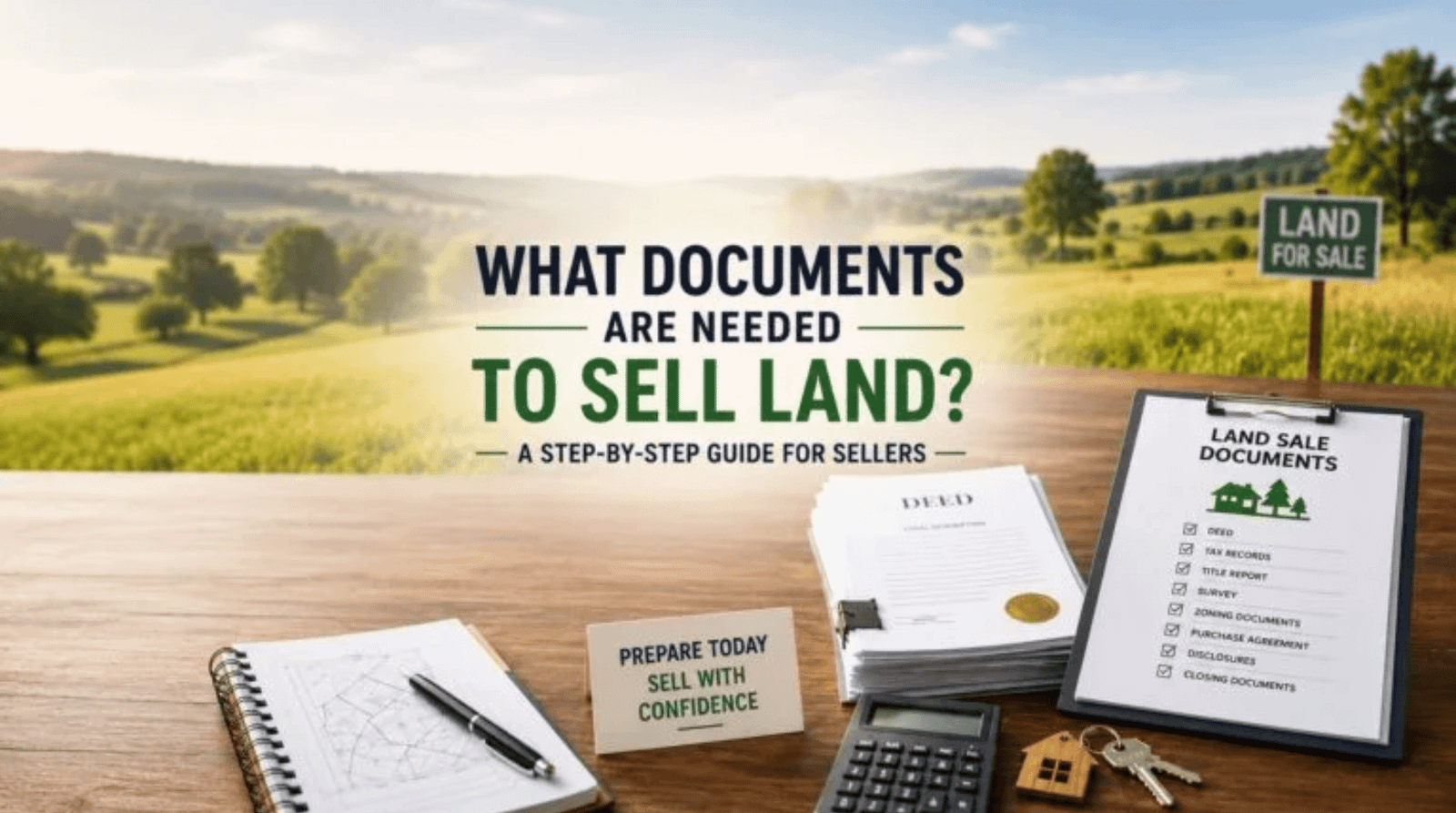
Quick reference checklist
- Current land deed
- Proof of ownership (tax bill, assessor record, trust or LLC paperwork if it applies) Property tax records and tax certificate
- Preliminary title report
- Land survey
- Zoning and land-use documentation
- Seller’s disclosure statement
- Purchase agreement
Land contract or promissory note (only if you’re financing the sale) New deed, closing statement, and lien releases at closing
The bottom line
Selling land really comes down to three things: proving you own it, showing it’s free of financial and legal baggage, and putting the agreed terms in writing. Start with your deed and proof of ownership, pull your tax records early, and don’t wait until you’re under contract to order a title report or survey. Get those pieces lined up before you draft the purchase agreement, and closing tends to go a lot smoother than people expect.
Suggested read: Trusted Land Buyers Explained: How a Local Land Buying Company Works
Frequently Asked Questions
Do I need a survey to sell land?
Not always — it depends on your state and whether the buyer is financing. But having one ready builds trust and heads off boundary arguments before they start.
What if I’ve lost my original deed?
Call your county recorder’s or clerk’s office. Deeds are public record, and they can issue you a certified copy.
Can I sell land without a purchase agreement?
You could, but it’s a bad idea. Without one, there’s no clear written record of the price or terms you and the buyer agreed to, and that leaves you exposed if something goes wrong later.
Do all states require a seller’s disclosure for land?
No — it varies by state, and sometimes by the type of land. A quick call to your state’s real estate commission or a local attorney will tell you what applies to you.