
Selling land online is now normal. Owners find buyers through land marketplaces, brokerage sites, social media, investor websites, email outreach, and direct cash-offer forms. Documents can be signed electronically, title work can be coordinated remotely, and many closings can be completed without the seller ever sitting in the same room as the buyer. That convenience is real—but it also creates an environment that criminals can exploit.
Table of Contents
ToggleThe safest answer to “Is it safe to sell land online?” is yes, if the online portion of the transaction is treated as a lead-generation and communication channel rather than as proof that the person on the other side is legitimate. A professional-looking website, a copy of a driver’s license, an email signature, or a buyer who knows your parcel number does not establish identity. Much of the information needed to impersonate an owner or research a parcel can be obtained from public records.
Why Vacant Land Has Become a Fraud Target
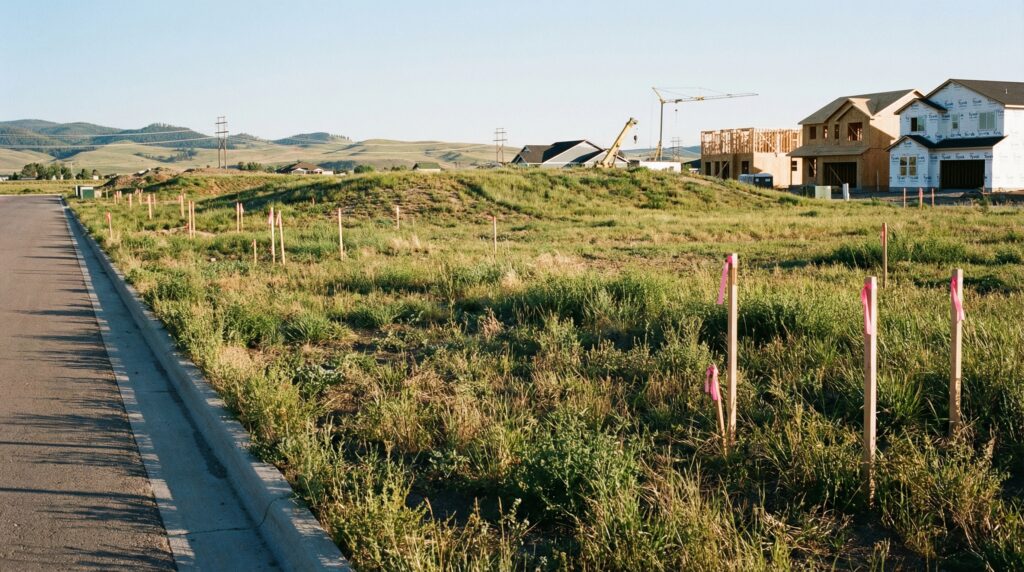
Vacant land is unusually attractive to impersonation fraud because no one lives there to notice a stranger placing a sign, photographing the property, or claiming to own it. Many parcels are owned free and clear, and owners may live in another county or state. A fraudster can search public property records, copy the real owner’s name and mailing address, create forged identification and notary documents, and then communicate entirely by email or text.
The FBI’s Newark field office warned in 2024 that criminals were impersonating vacant-land owners, asking for quick all-cash sales, accepting prices below market, and refusing in-person or video interaction. Agents described victims learning about the fraud only after seeing a for-sale sign, noticing construction equipment on the land, or discovering that someone else had paid the property taxes.
The Scale of Real Estate Fraud
The FBI Internet Crime Complaint Center’s 2025 annual report recorded 12,368 complaints in the broad “Real Estate” crime category and approximately $275.1 million in reported losses. That category is broader than vacant-land seller impersonation, so it should not be read as a vacant-land-only statistic. Still, it shows that real estate-related fraud is not a fringe problem. The same report showed reported real-estate losses rising from about $173.6 million in 2024 to about $275.1 million in 2025.
The title industry has also measured seller impersonation directly. In an American Land Title Association survey of 783 title-industry respondents from 49 states and Washington, D.C., 28% said their companies had experienced at least one seller-impersonation fraud attempt in the prior year, and 19% reported an attempt in April 2024 alone. ALTA identified vacant land, all-cash transactions, and unusual notary requests as common warning factors.
The Most Common Online Land-Sale Scams
1. Seller-impersonation or deed fraud
This is often aimed at the buyer, agent, title company, and true owner at the same time. A criminal pretends to be the owner, lists the parcel, signs forged documents, and tries to receive the proceeds. The real owner may not be communicating with anyone in the transaction at all.
2. Fake buyer or fake proof-of-funds scam
A supposed cash buyer may send altered bank statements, fake letters, counterfeit cashier’s checks, or screenshots that appear to show money. A legitimate closing professional should verify funds using independent contact information and should not rely on a document supplied only by the buyer.
3. Wire-instruction hijacking
A criminal compromises or imitates an email account and sends new wiring instructions. This can happen to buyers, sellers, attorneys, brokers, or title companies. The FTC warns consumers to be cautious with wire transfers because the money can be difficult to recover once sent. Never approve changed wire instructions based only on an email or text.
4. Fake title or closing company
Scammers can copy branding, create look-alike domains, or claim that a particular closing company must be used. Verify the company independently, search its state registration or license where applicable, call a phone number you found independently, and confirm the physical office and escrow instructions.
5. Upfront-fee or overpayment scam
A “buyer” may send more than required and ask you to refund the difference, or may demand that you pay a processing, appraisal, legal, crypto, courier, or release fee before the buyer can send funds. Do not send money to unlock a payment. A legitimate real estate closing should show costs transparently on the settlement statement and route funds through the agreed closing process.
Real-life case: A Florida vacant-lot impersonation scheme led to a six-year federal sentence
In April 2025, the U.S. Attorney’s Office for the Southern District of Florida announced that Uwa Nosakhare had been sentenced to six years in federal prison after pleading guilty in a scheme involving the impersonation of property owners and attempted sales of vacant lots in Palm Beach County.
According to the Department of Justice, the scheme used owners’ personal information to create fake driver licenses, notary credentials, bank statements, and other property-sale documents. After fraudulent sales, buyers were directed to wire proceeds to accounts controlled by participants in the scheme.
The case demonstrates why a document that looks official is not enough. Identity should be verified through a robust process, not just through a scan of an ID sent by email.
Case source: U.S. Department of Justice – Southern District of Florida, April 7, 2025
Real-life case: A landowner impersonation case in West Virginia ended with a federal prison sentence
In June 2025, a Maryland man was sentenced after a wire-fraud conspiracy involving a parcel in Hampshire County, West Virginia. According to DOJ, an individual impersonating a landowner contacted a realtor and listed property the imposter had no right to sell.
The scheme attempted to route sale proceeds to a co-conspirator’s bank account. The case is particularly relevant to online land sales because the fraudulent seller was able to initiate the process remotely through a legitimate real estate channel.
The lesson for sellers is broader than “beware of fake sellers”: everyone in a remote transaction should expect identity verification, independent bank verification, and scrutiny of last-minute changes. A buyer or closing company that asks you to complete these checks is not necessarily making the process difficult—it may be protecting all parties.
Case source: U.S. Department of Justice – Northern District of West Virginia, June 4, 2025
How to Verify a Land Buyer Before You Sign
- Verify the legal name. Ask for the buyer’s full individual or company name exactly as it will appear in the contract and deed-related documents.
- Search the state business registry if the buyer is an LLC or corporation. Confirm that the entity exists and compare its official name, status, registered agent, and formation information with what the buyer gave you.
- Verify any claimed professional license independently. If someone says they are a broker, attorney, title agent, appraiser, or other licensed professional, use the state regulator’s public lookup rather than a link the person emailed you.
- Ask for proof of funds, but do not rely on a screenshot. A title company, escrow officer, attorney, or bank should verify funds through an independent channel when appropriate.
- Search the company name, principals, phone number, domain, physical address, and complaint history. A new company is not automatically fraudulent, but unexplained inconsistencies deserve attention.
- Insist on a written contract. It should identify the parties, parcel, price, deposit, closing date, due diligence, costs, and cancellation rights.
- Use a known or independently verified closing professional. If the buyer insists on an unfamiliar provider, verify that provider yourself and ask whether you can use a neutral alternative.
Protect Your Identity as the Seller
Landowners often focus on whether the buyer is real, but seller identity can also be stolen. Avoid emailing unredacted identity documents to unknown addresses. Ask the closing professional what secure portal or identity-verification method they use. If a transaction requires remote notarization, confirm that the method is permitted for the document and jurisdiction involved and that the notary is independently verifiable.
Owners of vacant or investment property should also monitor the property itself. The FBI has recommended title or recording alerts where counties offer them, online alerts for the property, and periodic drive-bys or local checks. If you suddenly receive inquiries about a listing you did not create, contact the listing platform, broker, county recorder or clerk, and law enforcement promptly.
Use a Secure Closing Process
- Keep earnest money and sale proceeds in a legitimate escrow or closing account—not in a personal account belonging to an agent, coordinator, or unknown third party.
- Confirm wiring instructions by calling a trusted, publicly listed number. Do not use the phone number contained in the email that announced the wire change.
- Treat any last-minute change in bank, payee, email domain, notary, closing company, or signer as a reason to stop and re-verify.
- Review the settlement statement before signing. Confirm the sale price, credits, taxes, fees, loan payoffs, and net proceeds.
- Confirm the deed will be recorded in the correct county and keep copies of the signed contract, settlement statement, deed, tax forms, and correspondence.
- If the transaction feels rushed, slow it down. A legitimate buyer may have a fast timeline, but should still tolerate ordinary identity, title, and fund verification.
Red Flags That Should Stop an Online Land Sale
- The buyer or closing contact refuses a video call, independent phone verification, or identity check without a reasonable explanation.
- The company name on the contract does not match the bank account, website, email domain, or state business record.
- You are told to pay money before you can receive your proceeds.
- The buyer wants the deed signed before a reputable closing agent has confirmed funds and closing conditions.
- Wire instructions change at the last minute, especially by email only.
- A person pressures you not to contact the title company, attorney, bank, county office, co-owner, or family member.
- The offer is accompanied by a check for more than the required amount and a request that you send part of it elsewhere.
- The transaction moves unusually fast while basic questions about the company, funds, or closing process remain unanswered.
Is an All-Cash Online Offer a Red Flag?
No. Cash itself is not suspicious. Many legitimate land buyers use cash because vacant land can be harder to finance and because investors want predictable closings. The red flag is not “cash”; it is cash combined with poor identity verification, an unexplained below-market rush, unusual notary behavior, inconsistent company information, or an attempt to bypass a normal title and escrow process.
A legitimate cash buyer should be able to identify the purchasing entity, sign a clear agreement, provide credible evidence of funds, cooperate with title work, and close through a verifiable settlement professional. The buyer may request due diligence and may assign the contract if the agreement permits it, but those rights should be visible in writing—not discovered after you sign.
What to Do If You Suspect a Scam
- Stop sending documents or money.
- Call the title company, attorney, broker, bank, or closing professional using independently sourced contact information.
- If a wire has already been sent, contact your bank immediately and ask for a recall or fraud escalation. Speed can matter.
- Preserve emails, texts, screenshots, contracts, caller IDs, bank instructions, and website addresses.
- Report internet-facilitated fraud to the FBI’s Internet Crime Complaint Center at IC3.gov and follow local law-enforcement guidance.
- If your deed or title may have been altered, contact a real estate attorney and the county recorder or clerk promptly.
Bottom Line: Online Is a Channel, Not a Trust Signal
It is safe to sell land online when you separate convenience from verification. Use the internet to advertise, compare offers, exchange routine information, and coordinate a transaction. But verify identity through independent sources, verify the business through official records, verify money through secure channels, and use a reputable closing professional before signing away title.
The best online land sale is not the one with the fewest steps. It is the one where the buyer, seller, title, contract, bank instructions, and deed all line up—and where everyone is willing to pause when something does not.
Suggested read: Sell Empty Land Online: Step-by-Step Guide for a Quick and Easy Sale
Verified Sources and Further Reading
FBI Newark – Fraudsters Are Stealing Land Out from Under Owners: https://www.fbi.gov/contact-us/field-offices/newark/news/fraudsters-are-stealing-land-out-from-under-owners
FBI IC3 2025 Annual Report – real estate complaint and loss data: https://www.ic3.gov/AnnualReport/Reports/2025_IC3Report.pdf
American Land Title Association – Seller Impersonation Fraud Study: https://www.alta.org/business-operations/research-initiatives-and-resources/critical-issue-studies/seller-impersonation-fraud-study
U.S. DOJ – Florida vacant-lot impersonation case: https://www.justice.gov/usao-sdfl/pr/nigerian-national-sentenced-federal-prison-fraud-scheme
U.S. DOJ – West Virginia sham land-sale case: https://www.justice.gov/usao-ndwv/pr/maryland-man-sentenced-wire-fraud-hampshire-county
FTC – What to Know Before You Wire Money: https://consumer.ftc.gov/articles/what-know-you-wire-money