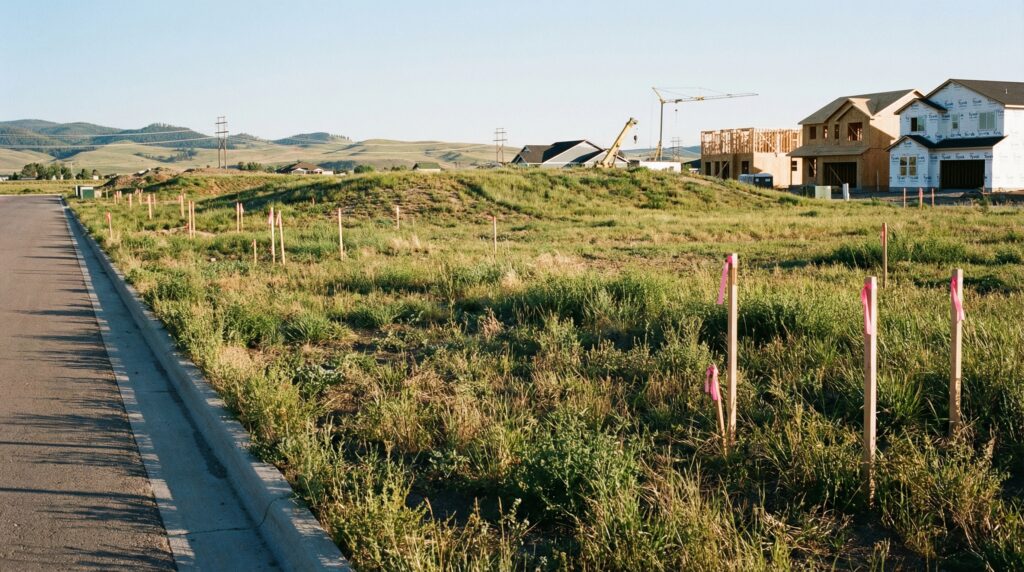

If you are asking, “Do I need a realtor to sell land?” the practical answer is no—you may be able to sell land without a realtor. The more important question is whether selling on your own is the best choice for your parcel, your timeline, and your comfort level with pricing, buyer screening, contract terms, title work, and closing. Vacant land is not simply a house without a building. Its value can turn on legal access, frontage, zoning, soil suitability, utilities, floodplain, topography, timber or mineral rights, easements, subdivision rules, and the exact legal description. Those details can make a land sale straightforward—or can create expensive problems if they are discovered only after a buyer is under contract.
Table of Contents
ToggleA realtor or land broker can be valuable when you need broad market exposure, professional pricing support, local buyer relationships, negotiation help, and someone to coordinate the transaction. But a traditional listing is only one selling route. Owners also sell land by owner, directly to a known buyer, to an investor or cash land buyer, through an auction, or with the help of a real estate attorney and title or closing professional. The right approach depends less on a slogan like “always use an agent” or “never pay a commission” and more on what you are optimizing: maximum price, speed, convenience, certainty, privacy, or control.
What a Realtor or Land Broker Actually Does
A strong land-focused agent does more than place a sign on the property. The agent may research comparable land sales, review public parcel data, identify the likely buyer profile, recommend a list-price strategy, prepare marketing materials, syndicate the listing, answer buyer questions, collect offers, negotiate price and contingencies, and coordinate with surveyors, title companies, attorneys, lenders, inspectors, and local officials. For unusual acreage, farms, recreational tracts, development sites, or parcels with access questions, the value of experienced representation may come from preventing mistakes rather than simply generating leads.
Compensation should not be treated as a fixed legal percentage. The National Association of REALTORS® states in its 2026 ethics rules that broker compensation is not set by law and is fully negotiable. That matters when you compare a listing arrangement with selling land by owner: the decision should be based on the actual services, fee structure, exposure, expected net proceeds, and risk—not on an assumed commission number.
Can You Sell Land Without a Realtor?
Yes. A property owner can generally market and sell their own real estate without hiring a broker. What you cannot safely assume is that every task in a real estate transaction can be delegated to an unlicensed friend, virtual assistant, marketer, or “consultant” who is paid based on the sale. States regulate brokerage activity performed for others. If someone will solicit buyers, show property, negotiate terms, or receive transaction-based compensation on your behalf, check the licensing rules in the state where the property is located.
Selling land by owner can work especially well when you already know the buyer, have a simple parcel with clear title and access, have recent comparable sales, and are willing to manage inquiries and paperwork. It can also work when you intentionally choose a direct-sale model—for example, requesting offers from established land buyers and then using an independent title or closing professional to verify ownership, liens, deed requirements, and funds.
Four Common Land-Selling Options
- Traditional land listing with a licensed agent or broker. Best suited to sellers who want market exposure and professional representation and who are willing to allow time for marketing, due diligence, and buyer financing.
- For Sale By Owner (FSBO). You set the price, advertise, answer inquiries, negotiate, and select the closing professionals. This can reduce brokerage expense but increases the work and responsibility carried by the seller.
- Direct sale to a cash land buyer or investor. This can reduce marketing time and financing uncertainty. The tradeoff is that a convenience-oriented buyer may price in the cost of due diligence, resale risk, holding costs, and profit.
- Auction or specialized land marketplace. This may be useful for property that attracts competitive bidding or for owners who want a defined sale date. Auction terms, reserve prices, buyer premiums, marketing fees, and closing rules should be reviewed carefully.
What the National FSBO Data Can and Cannot Tell a Land Seller
National housing statistics are often quoted in discussions about selling without an agent, but they should be used carefully for land. NAR’s 2025 Profile of Home Buyers and Sellers reported that 5% of primary-residence home sales were FSBO and that 91% of sellers used an agent. It also reported a lower median sale price for FSBO homes than agent-assisted homes. Those figures are useful evidence that many residential sellers prefer professional representation, but the study is about primary residences—not vacant land, farms, timber tracts, or development parcels. A land seller should not assume the same pricing gap applies to their parcel. Land markets are thinner, more local, and often driven by factors that are not captured by home-sales statistics.
The practical takeaway is not that FSBO is automatically bad. It is that a seller who goes without an agent needs a reliable way to replace the functions an agent would otherwise perform: price discovery, marketing, buyer qualification, documentation, negotiation, scheduling, and transaction coordination.
Pricing Land Without an Agent
Pricing is where many owner-sellers struggle because online home-value tools are rarely designed for vacant land. The best starting point is recent, genuinely comparable land sales—not simply asking prices. Compare acreage, location, road frontage, access type, zoning, utilities, soils, topography, flood risk, improvements, timber, water features, development potential, and restrictions. A five-acre buildable parcel with public road frontage is not automatically comparable to a five-acre landlocked tract three miles away.
County assessor and recorder data can help locate prior transfers, but assessed value is not the same thing as market value. If the property is unusual or the potential price difference is material, a land appraiser, broker price opinion where lawful, or local land professional can provide a stronger valuation benchmark. Sellers should also calculate their likely net—not just the headline sale price. A higher offer with long contingencies, repair or access demands, and seller-paid costs can produce a worse result than a slightly lower clean offer.
What You Still Need When You Sell Land by Owner
- A current understanding of who owns the property and how title is held, including trusts, estates, LLCs, multiple owners, or marital interests.
- The parcel number and a reliable legal description. A street address alone is not enough to convey land.
- A review of taxes, liens, judgments, mortgages, unpaid assessments, and other title issues.
- Accurate information about access, easements, restrictions, zoning, utilities, floodplain, septic or soil conditions, and any known material issues.
- A written purchase agreement that clearly states price, earnest money, due-diligence rights, closing deadline, cost allocations, default remedies, and any contingencies.
- A reputable title company, escrow company, closing attorney, or other state-appropriate settlement professional.
- A plan for federal tax reporting and records showing your cost basis and capital improvements.
The IRS explains that gain or loss generally depends on the amount realized compared with the property’s adjusted basis. It also identifies improved and unimproved land as reportable real estate for Form 1099-S in many transactions. Because inherited land, gifted land, subdivided property, business property, and installment sales can have different rules, keep settlement statements, prior deeds, improvement receipts, and basis records and involve a tax professional when the numbers are significant.
Real-life case: A 20-acre Tennessee sale became a contract dispute over due diligence and an easement
In Thomas A. Smythe v. Fourth Avenue Church of Christ, Inc., the Tennessee Court of Appeals reviewed a dispute involving a 20-acre commercial property. The buyer placed a $60,000 deposit in escrow and had a due-diligence period. A new access easement became a key issue, and the parties exchanged proposed extensions and addenda.
The dispute eventually turned on whether the parties had actually reached mutual assent on a material term of a proposed contract modification—specifically, whether the extended diligence period had a fixed deadline or was open-ended. The appellate court affirmed the seller’s summary judgment.
The case is a useful land-sale lesson even though it is not a simple FSBO cautionary tale: access, deadlines, deposits, contingencies, and contract amendments can matter more than the marketing channel. A seller can choose to sell without a realtor and still benefit from precise legal drafting and a disciplined closing process.
Case source: Tennessee Administrative Office of the Courts – Thomas A. Smythe v. Fourth Avenue Church of Christ, Inc.
When Selling Without a Realtor May Be a Good Fit
- You already have a credible buyer and mainly need a clean contract and closing.
- The parcel is simple, with clear access, title, boundaries, and permitted use.
- You know the local land market and have defensible comparable sales.
- You can respond promptly to buyer questions and keep detailed records.
- You are willing to hire separate professionals—such as an attorney, surveyor, appraiser, or title company—when an issue exceeds your expertise.
- You value control and are comfortable trading broader exposure for lower selling friction.
When a Land Realtor or Broker May Be Worth It
- The parcel has development potential that requires targeted marketing to builders, farmers, timber buyers, or commercial users.
- You do not know how to price the property or have little reliable sales data.
- There are easement, access, zoning, subdivision, water, mineral, timber, or boundary issues.
- You want the property exposed to the widest relevant pool of buyers and do not want to manage inquiries.
- You expect multiple offers or complicated negotiations.
- You are an out-of-state owner and need someone local to coordinate signs, showings, photos, survey access, inspections, and vendors.
How to Compare the Options by Net Result
Before choosing an agent, FSBO, or a direct land buyer, put the options on the same worksheet. Start with realistic sale price, then subtract brokerage or auction fees, title or attorney costs you expect to pay, transfer or recording charges allocated to you, survey or cleanup costs, property taxes, holding costs, and any seller concessions. Then add the value of time and certainty. A theoretical higher price six months from now is not automatically better if you are paying taxes, insurance, mowing, association fees, debt service, or opportunity costs while you wait.
For cash offers, compare proof of funds, deposit, due-diligence period, assignment rights, closing date, inspection rights, cancellation language, and who chooses the closing agent. For agent listings, compare the agent’s land experience, recent relevant transactions, marketing plan, photography or mapping, listing term, cancellation terms, compensation, and communication process. For FSBO, budget for your own time and for professional help when you need it.
Bottom Line: You Do Not Need a Realtor for Every Land Sale
You can sell land without a realtor, but “without a realtor” should never mean “without verification.” A safe land sale still needs a clear chain of title, a written agreement, accurate property information, verified funds, secure handling of money, and a properly executed and recorded deed. The best selling option is the one that produces the strongest combination of net proceeds, certainty, timing, and risk control for your specific property.
If you already have a buyer, a straightforward FSBO closing may be efficient. If you need maximum market exposure or have a complicated tract, a land-focused agent may earn their fee. If speed and simplicity matter most, a reputable direct buyer can be worth comparing with the open-market route. Get more than one opinion when the value is significant, and do not let urgency replace due diligence.
Suggested read: Sell Land Without A Realtor Quick and Online in 2026